Tip Of AI
Discover what you can do with AI
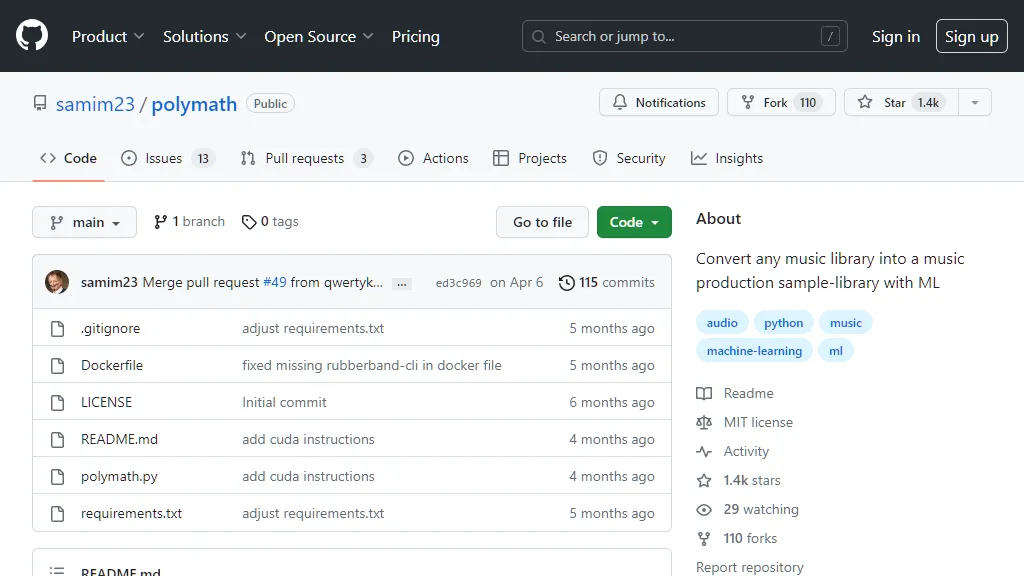
Polymath is a tool that uses machine learning to convert any music library, whether it is stored on a hard drive or from YouTube, into a music production sample-library. It offers several features to streamline the workflow for music producers, DJs, and ML audio developers. One of its main features is the ability to automatically separate songs into stems such as beats, bass, and more. It also quantizes the stems to the same tempo and beat-grid, making it easier to combine elements from different songs to create unique compositions. The tool also analyzes the musical structure, key, and other information such as timbre and loudness, and converts audio to MIDI. Polymath provides a searchable sample library, allowing users to quickly find and integrate specific elements from different songs. This makes it effortless to create mash-up DJ sets or to create a large music dataset for training generative models. The tool uses various neural networks for different tasks such as music source separation, music structure segmentation and labeling, music pitch tracking and key detection, and music to MIDI transcription. It also utilizes libraries like pyrubberband and librosa for music quantization, alignment, and information retrieval. To use Polymath, users need to have software like ffmpeg and Python version >=3.7 and <=3.10 installed on their systems. GPU support is also available for most of the libraries used by Polymath. The tool can be installed by cloning the GitHub repository and installing the required dependencies using pip. Polymath also offers Docker support for easy deployment and provides instructions on how to build a Docker image and run the tool within the container. In summary, Polymath is a powerful tool for music producers, DJs, and ML audio developers, allowing them to convert their music libraries into a sample-library, streamline their workflow, and easily create unique compositions.